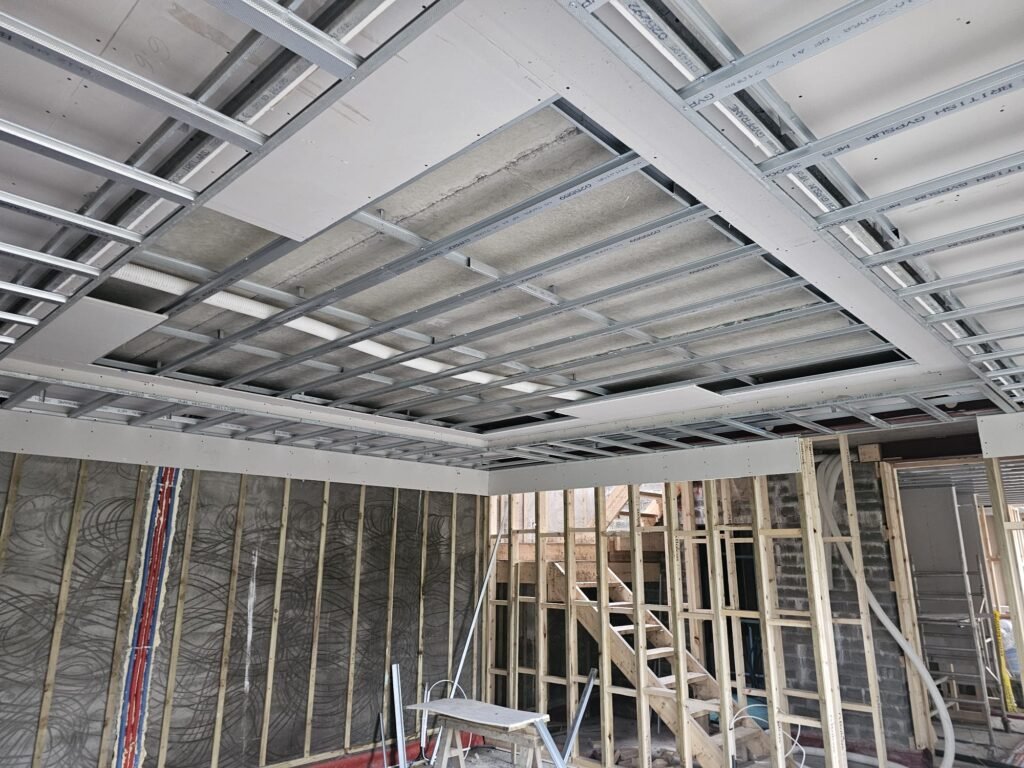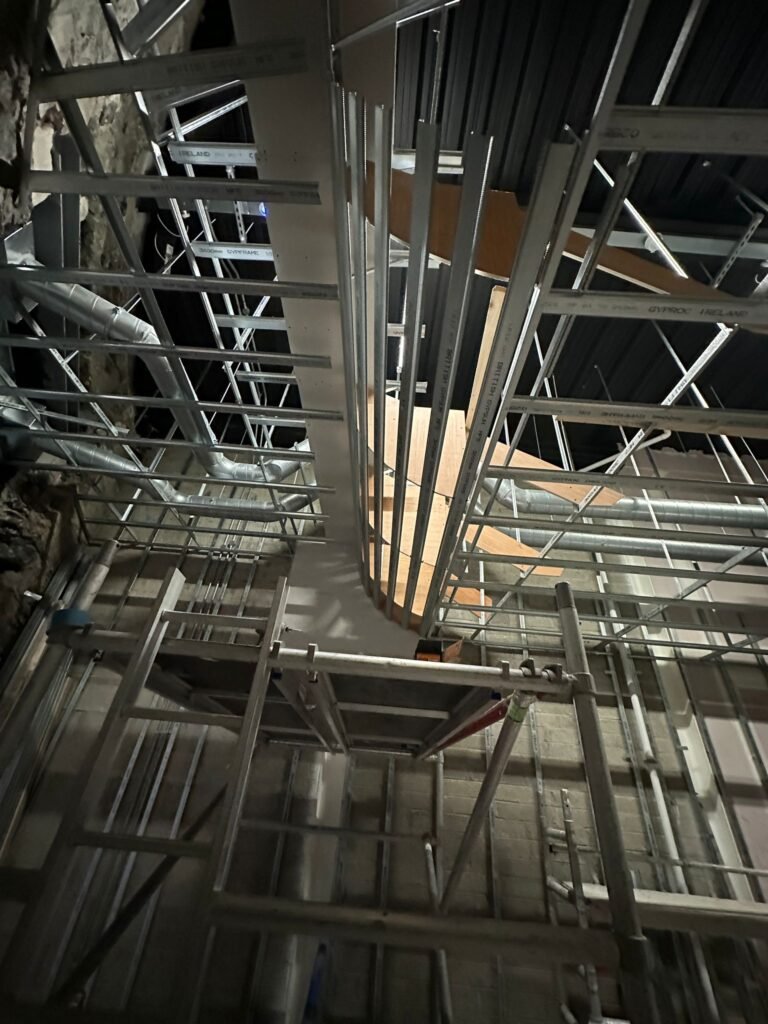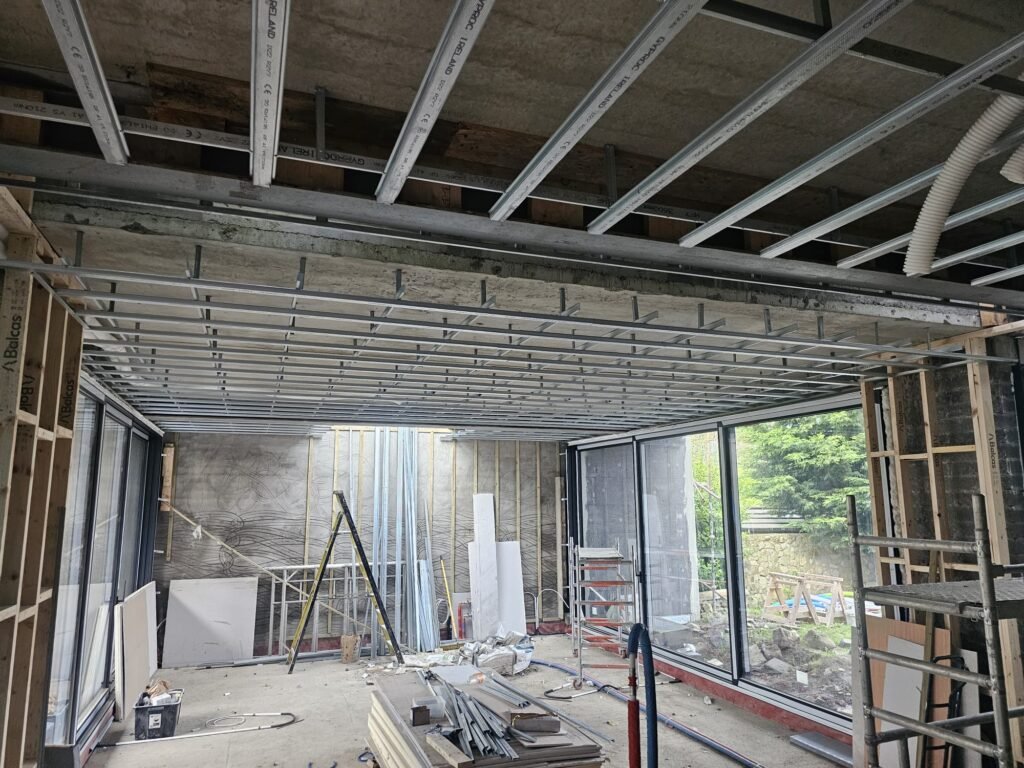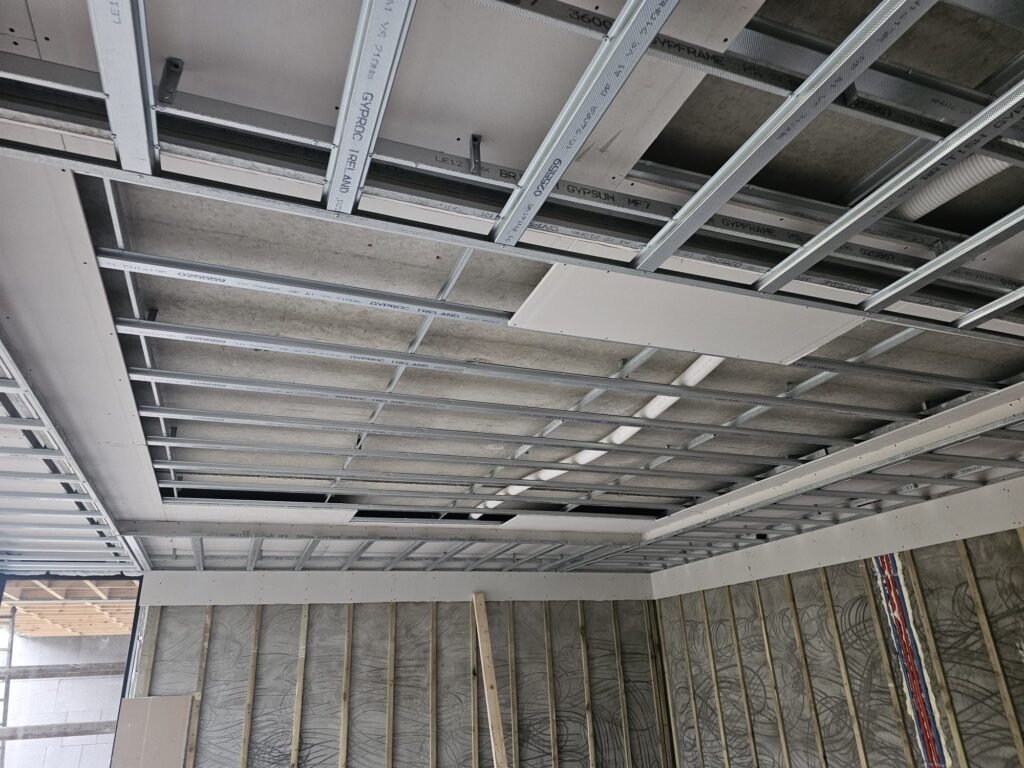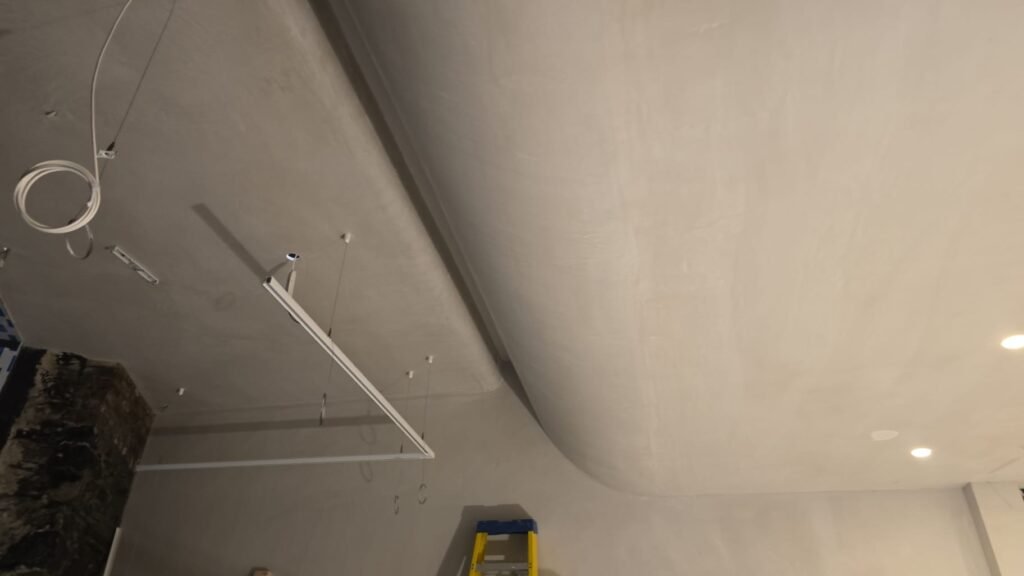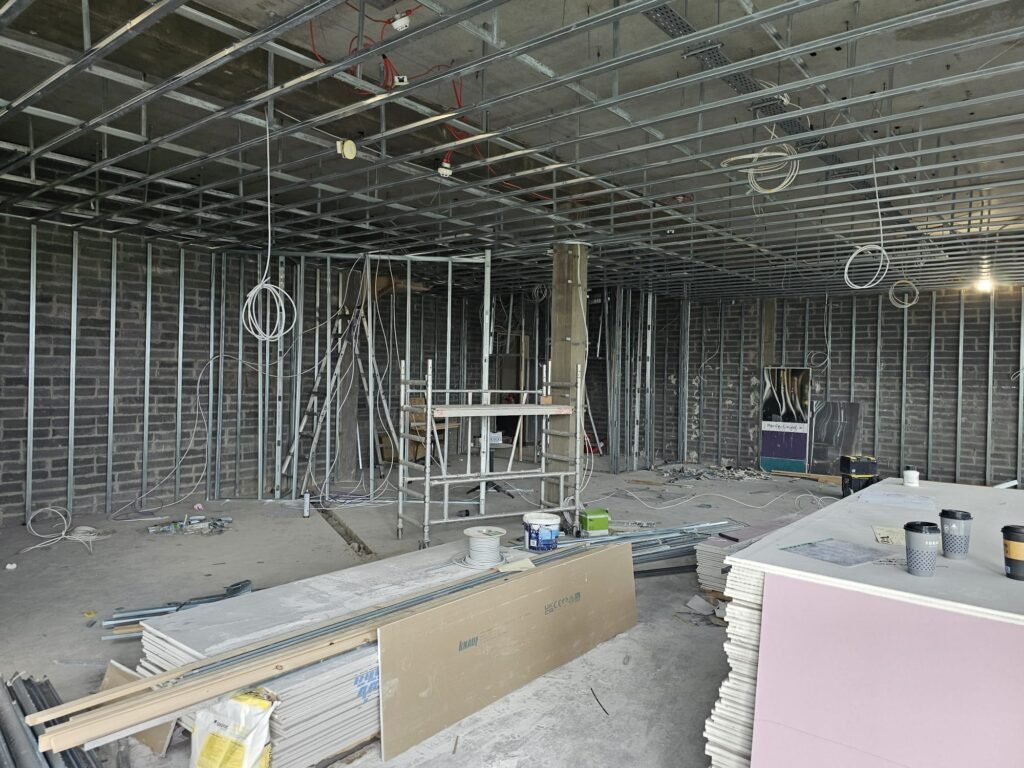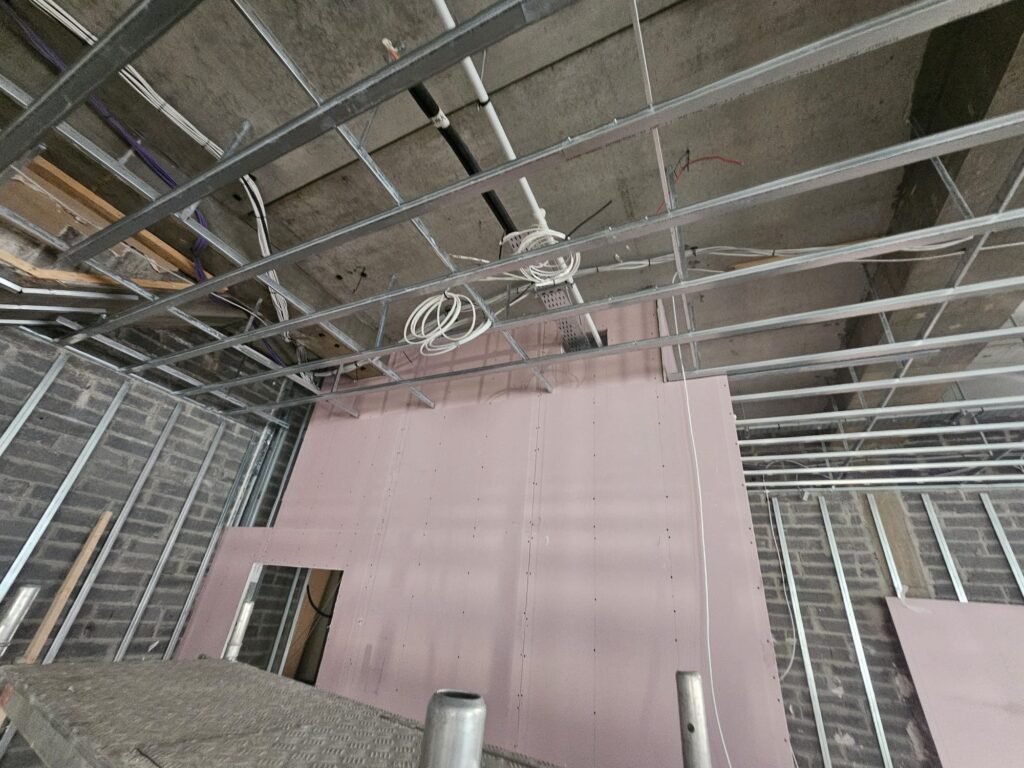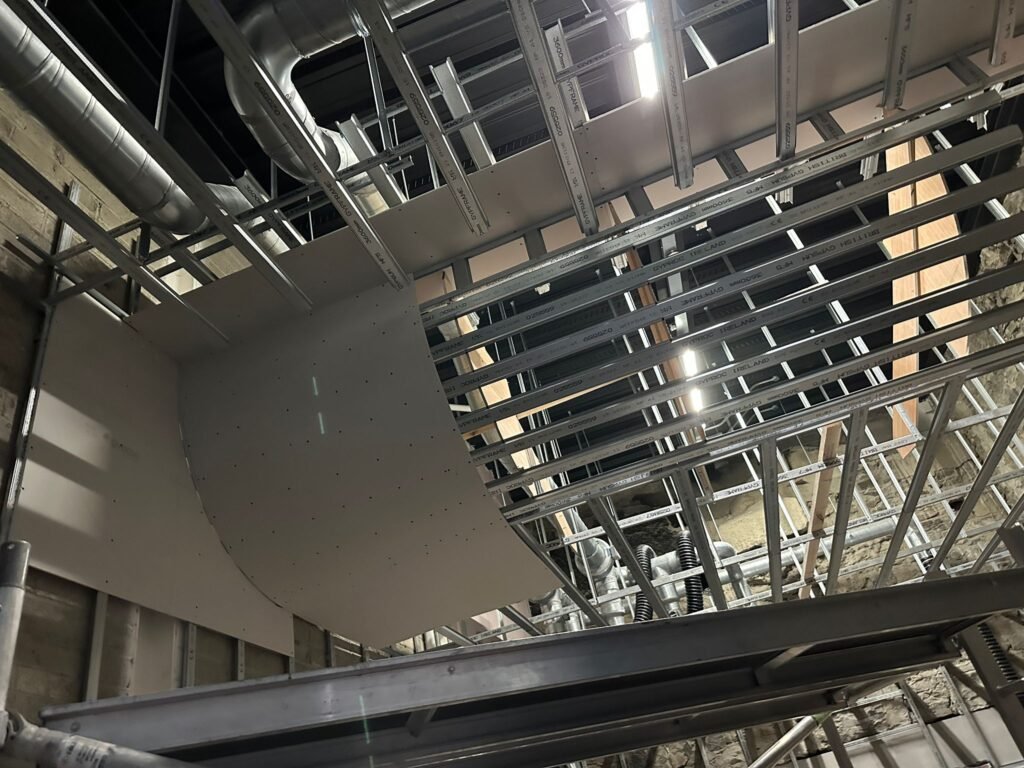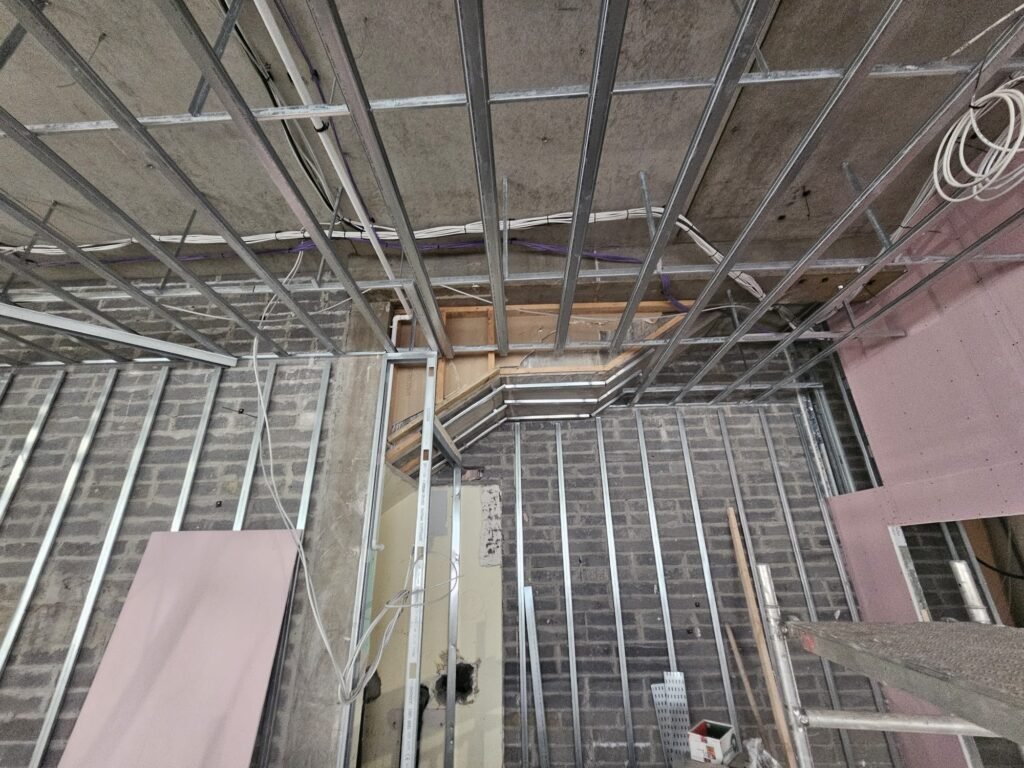
A suspended ceiling is a secondary ceiling installed below the original structural ceiling of a building. Installers create the system using a metal grid framework that hangs from the main ceiling with wires or brackets.
After installers secure the framework, they place ceiling tiles or panels into the grid to form a smooth and uniform surface. Because the system sits below the original ceiling, it creates space above the panels.
This space allows builders to hide electrical cables, pipes and ventilation systems while still maintaining easy access for maintenance when necessary.
Improved Appearance
Suspended ceilings create a clean and consistent ceiling finish that improves the overall look of a room.
Flexible Design Options
Builders can install different types of ceiling tiles to suit lighting layouts, acoustics and interior design.
Access to Services
Ceiling panels can be removed easily. Therefore, electricians and plumbers can access wiring or pipes without damaging the ceiling.
Efficient Installation
Because suspended ceilings install quickly, builders can complete interior renovation projects more efficiently.
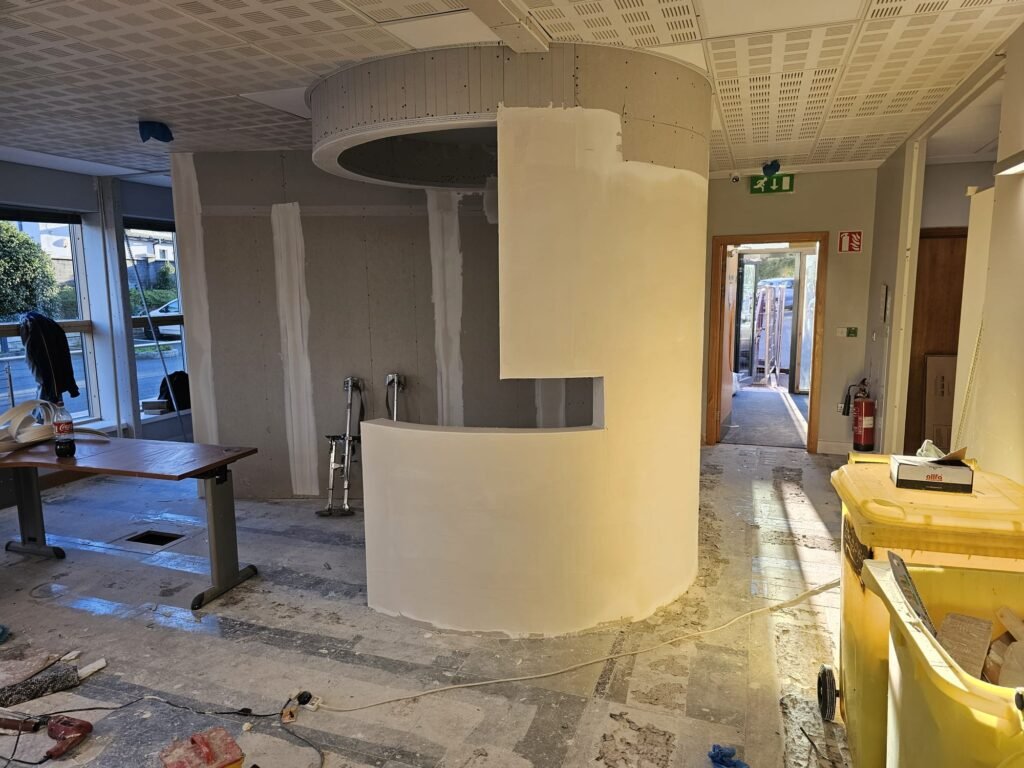
Homeowners also choose suspended ceilings when improving lighting layouts or modernising interior spaces. As a result, these systems appear in basements, extensions and attic conversions where new ceiling structures are required.
Because ceiling panels can be removed easily, suspended ceilings provide a practical solution for properties that require ongoing maintenance access.
Gallery