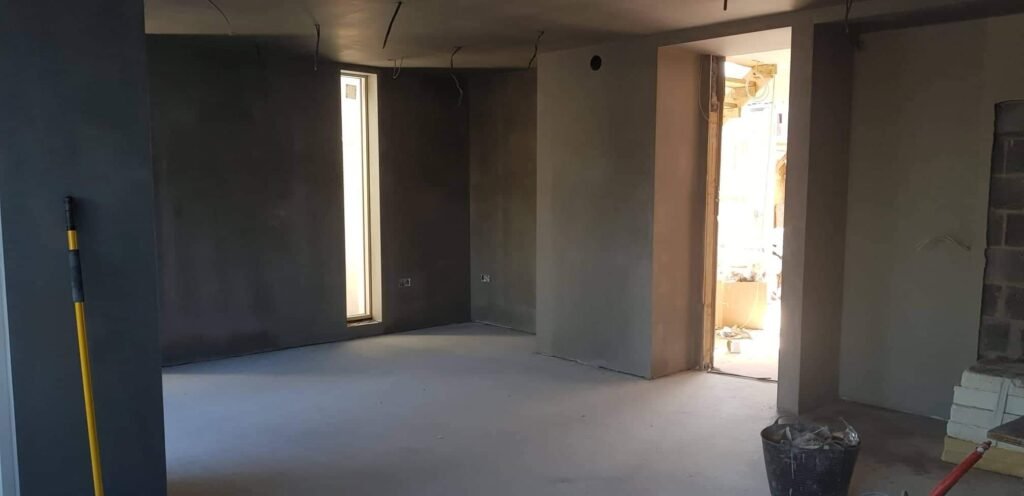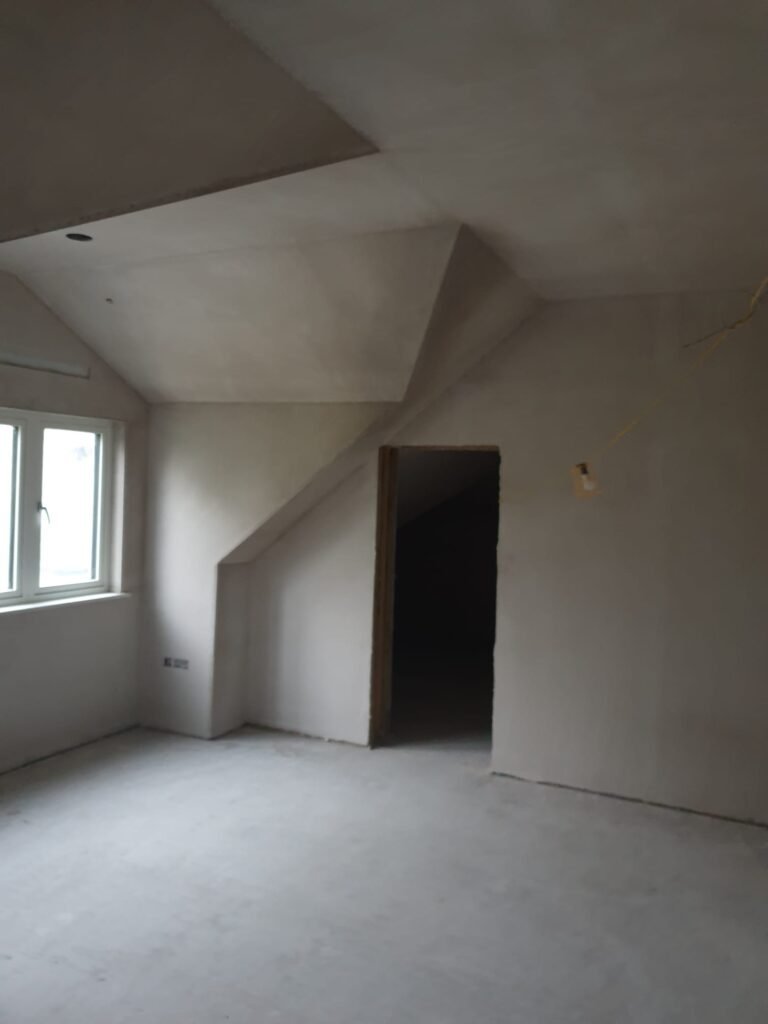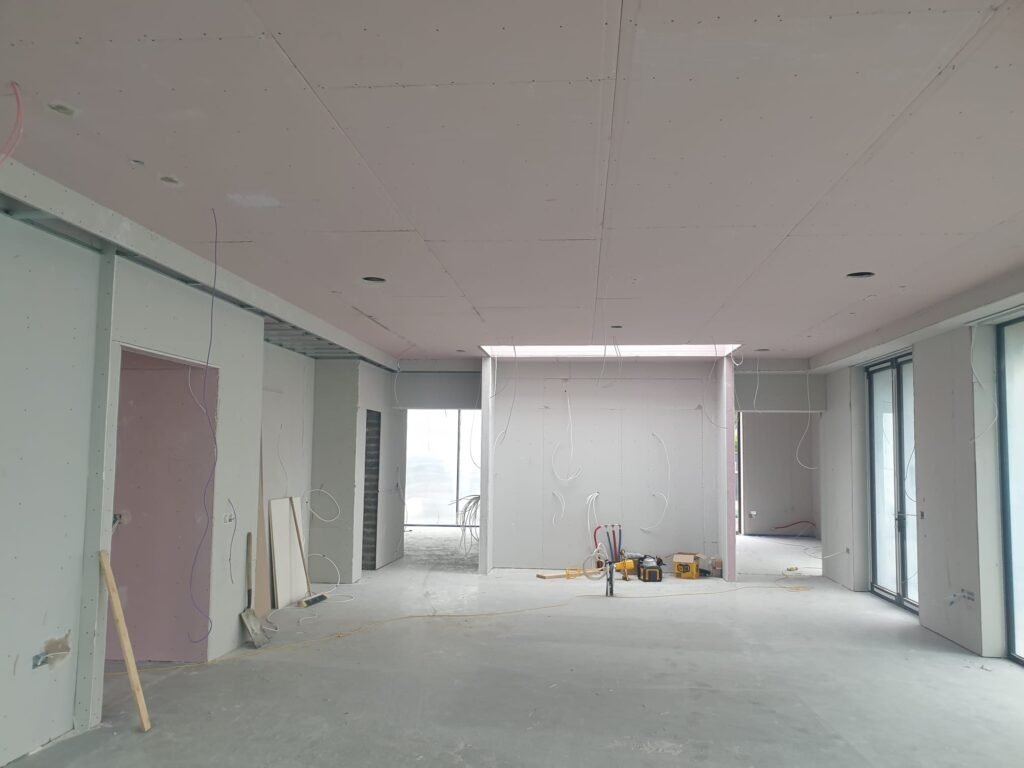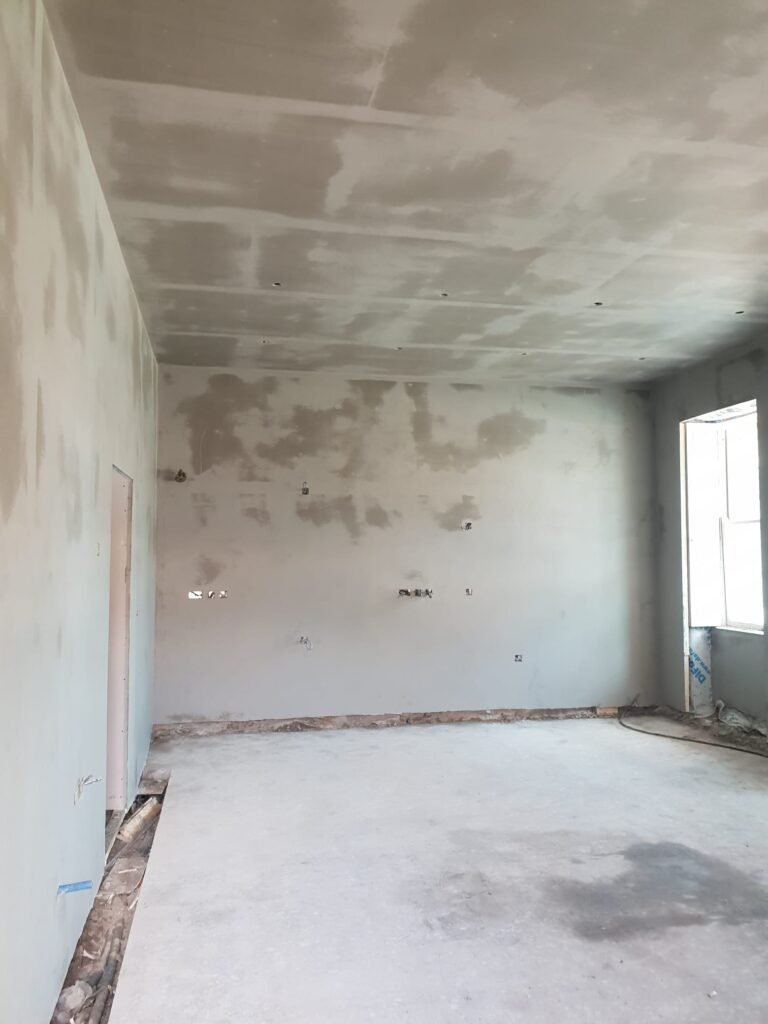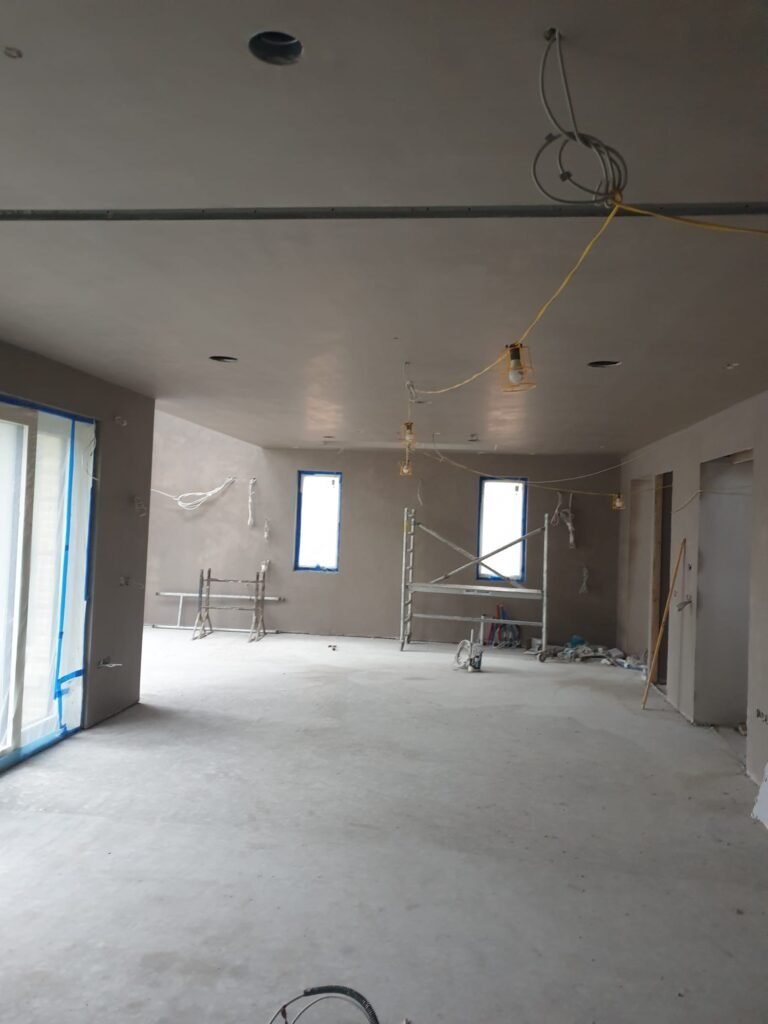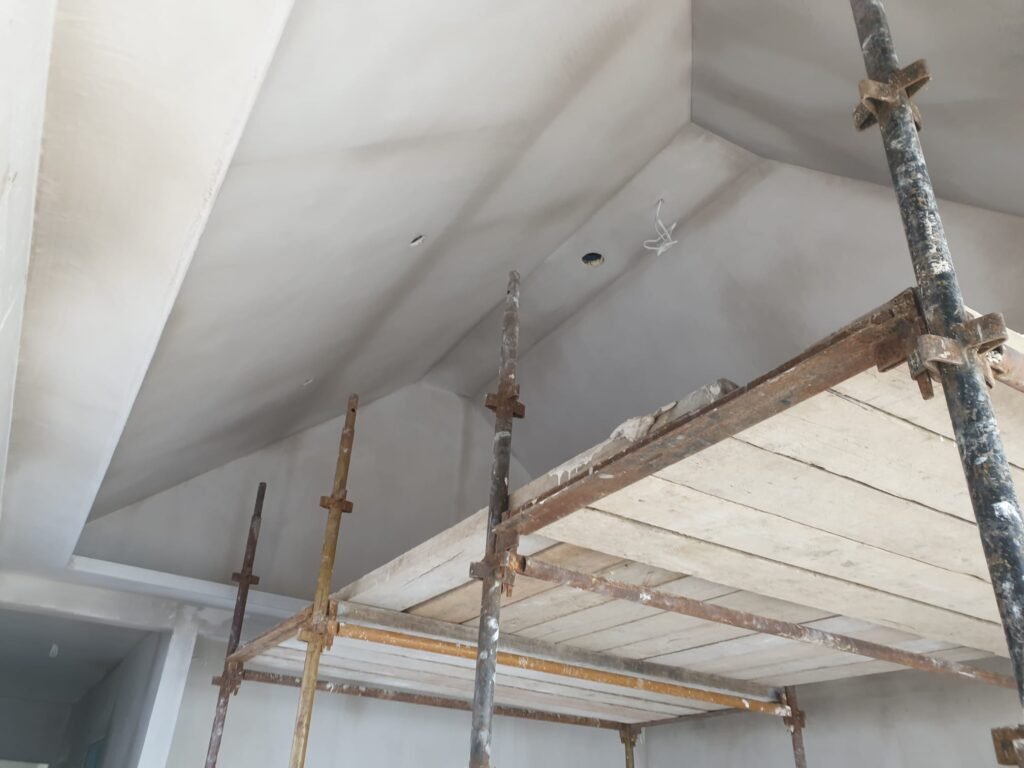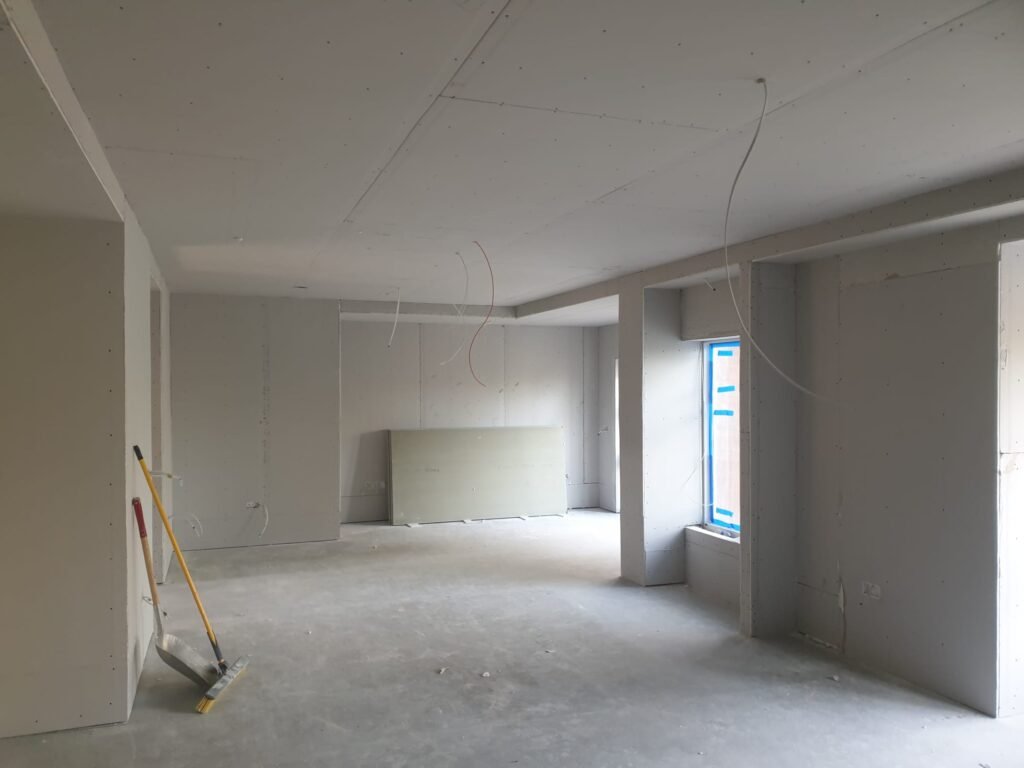
Dry lining involves fixing plasterboard sheets to walls or ceilings to create smooth interior surfaces. Installers can attach plasterboard directly to masonry walls with adhesive or secure it to metal or timber framing systems. After installation, installers tape and fill the joints between boards to create a seamless surface ready for decoration
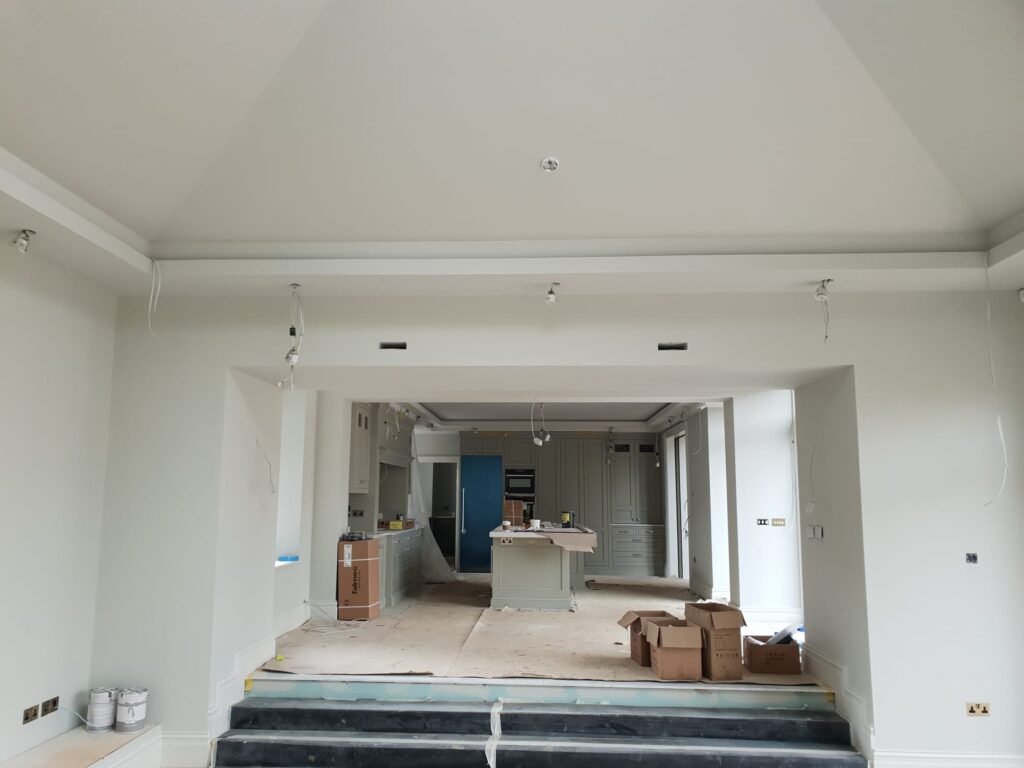
In many projects, plasterers also apply a skim coat of plaster to achieve an even smoother finish. Because dry lining avoids applying wet plaster across large surfaces, the process reduces drying time. As a result, other trades can continue their work sooner.
Faster Installation
Dry lining systems install quickly. Therefore, builders can move construction projects forward more efficiently.
Clean and Straight Surfaces
Plasterboard creates smooth and level interior walls and ceilings. As a result, decorators can apply paint or finishes more easily.
Space for Services
Dry lining systems allow electricians and plumbers to run wiring, pipes and insulation inside wall cavities. Consequently, builders can keep interior spaces organised and efficient.
Flexible Interior Construction
Builders can use plasterboard systems to create interior partitions, ceilings and wall structures. Because of this flexibility, dry lining works well in many construction projects.
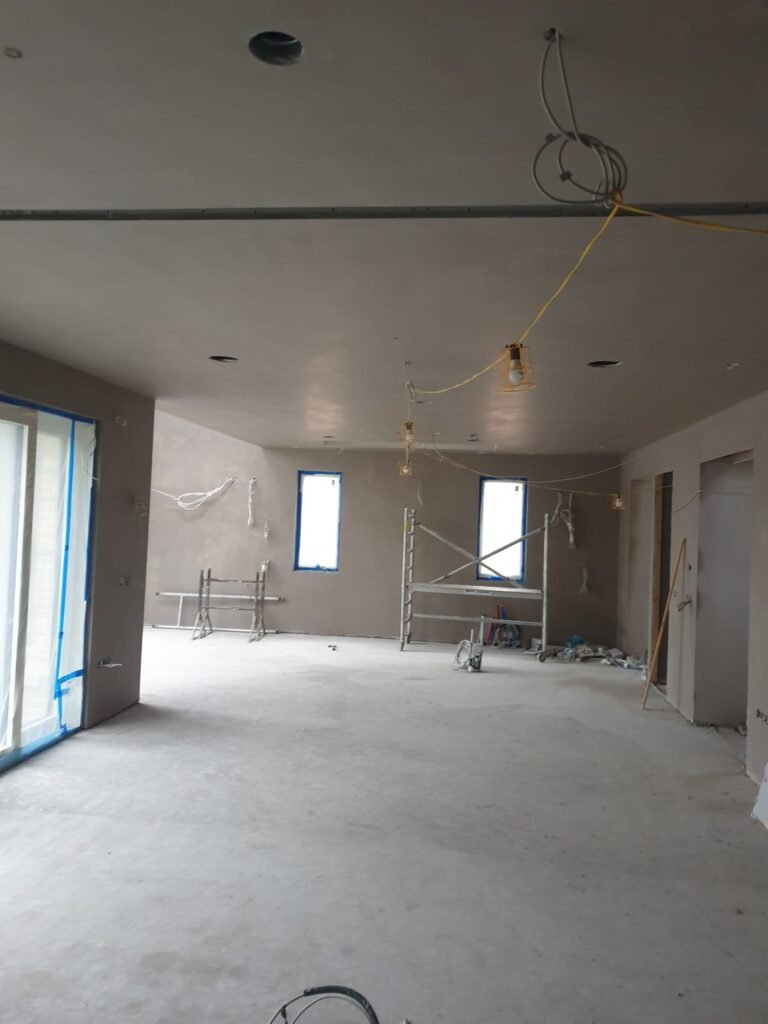
In renovation projects, dry lining improves uneven or damaged walls in older homes. Instead of rebuilding walls completely, installers place plasterboard over existing surfaces to create a modern interior finish.
Homeowners also use dry lining in attic conversions and property upgrades where new interior walls or ceilings are required.
Gallery